Our Process

Industry veterans lead the questions; AI accelerates patterns; together they deliver clear, accountable insight.
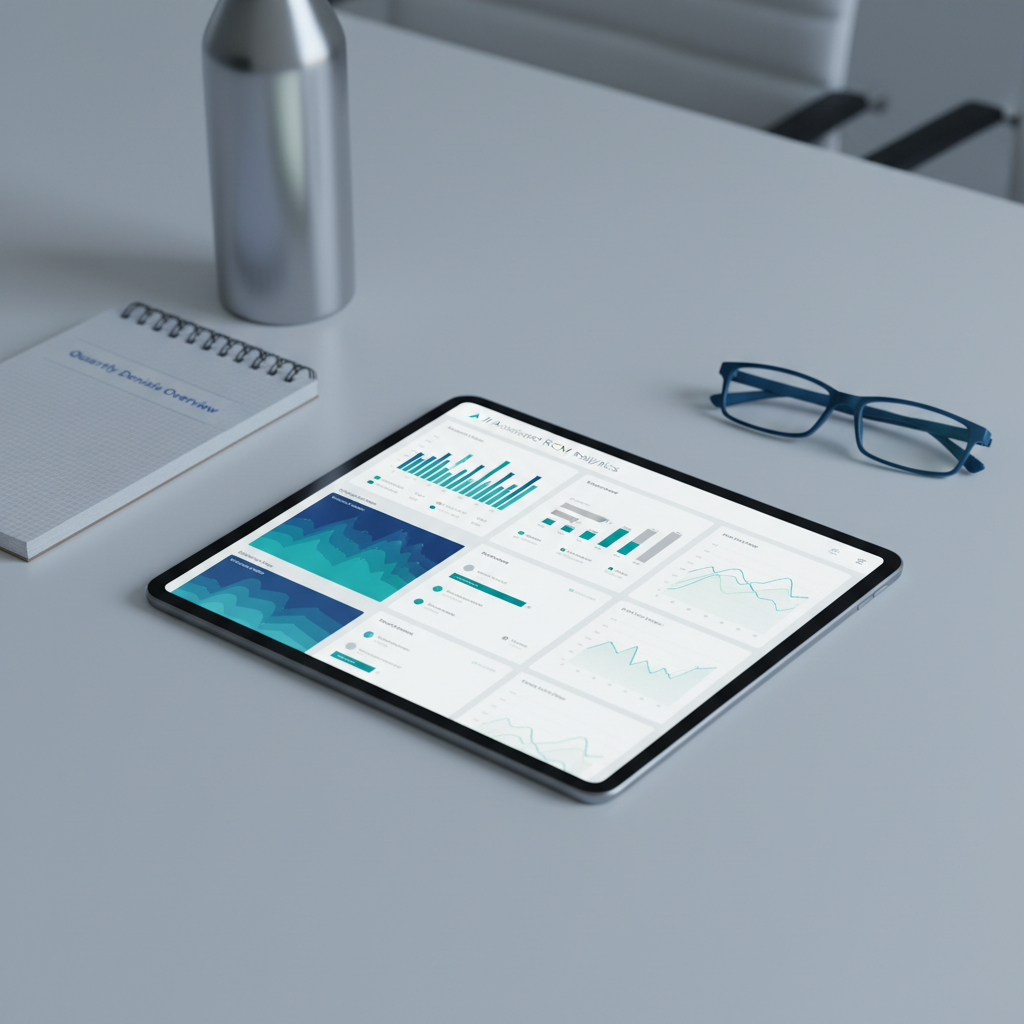
A close-up of a sleek tablet lying on a matte white conference table, displaying an AI-assisted healthcare RCM analytics interface. The screen shows denial trend heatmaps, payer performance scorecards, and predictive cash flow graphs rendered in sophisticated shades of blue, emerald, and soft gray. Around the tablet are neatly aligned items: a spiral-bound report labeled “Quarterly Denials Overview,” a stainless-steel water bottle, and a pair of rectangular blue-light glasses folded closed. Cool, directional overhead lighting creates subtle reflections along the tablet’s glass edge and emphasizes the vivid luminosity of the screen. Photographic realism, shot from a slightly elevated three-quarter angle with a shallow depth of field so the interface is razor sharp while the table edges gently blur, conveying a forward-looking, data-driven, and professional mood without depicting any people.

RCM Experts

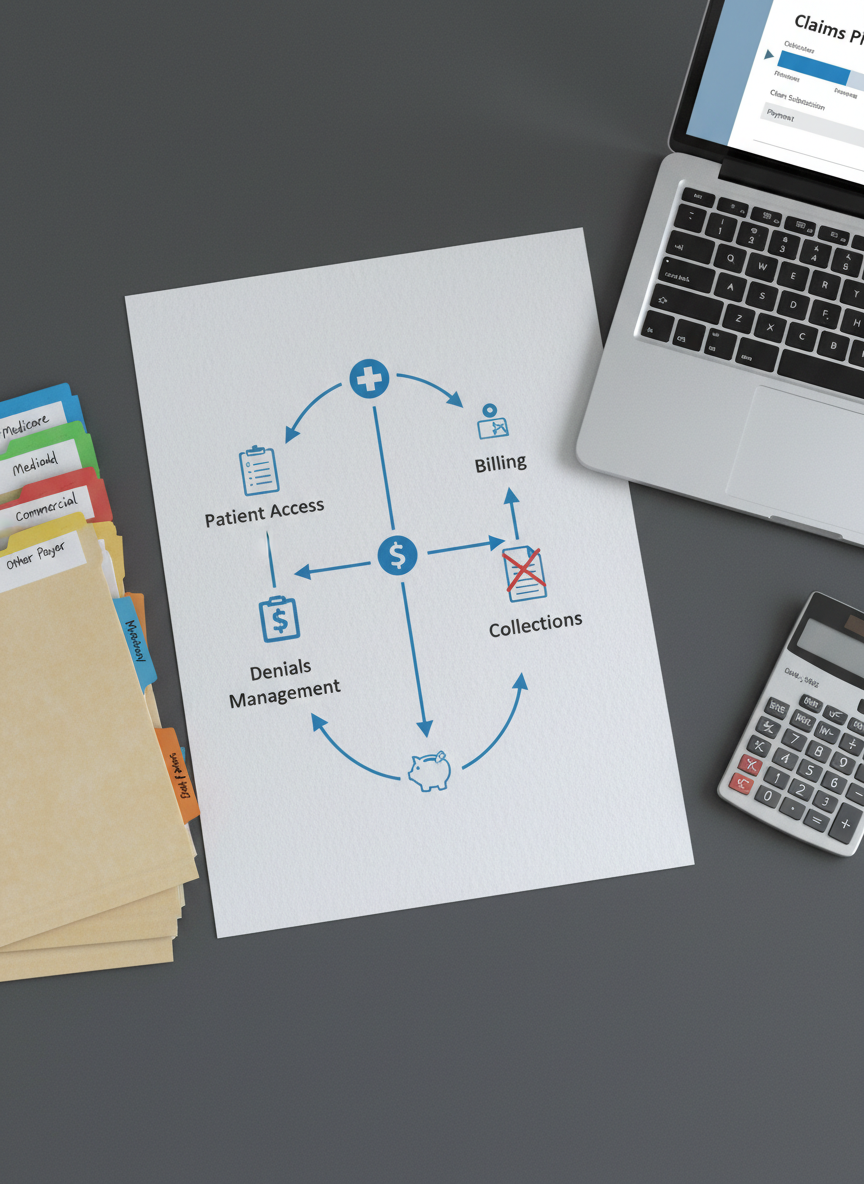
An overhead view of a meticulously organized revenue cycle workflow diagram printed on heavy, matte white paper, spread neatly across a charcoal-gray desk. The diagram shows clearly labeled phases like patient access, coding, billing, denials management, and collections, connected by precise arrows and minimalist icons. Beside it lies an open silver laptop displaying a simplified claims pipeline visualization, along with a slim calculator and a stack of color-tabbed folders labeled with payer categories. Diffused, cool studio lighting eliminates harsh shadows and highlights fine text details, creating a calm, methodical atmosphere. Photographic realism, top-down composition with sharp focus from edge to edge, evoking a clean, strategic planning session in a professional RCM environment, completely without people.

Aarav Sharma

CEO

A close-up of a sleek tablet lying on a matte white conference table, displaying an AI-assisted healthcare RCM analytics interface. The screen shows denial trend heatmaps, payer performance scorecards, and predictive cash flow graphs rendered in sophisticated shades of blue, emerald, and soft gray. Around the tablet are neatly aligned items: a spiral-bound report labeled “Quarterly Denials Overview,” a stainless-steel water bottle, and a pair of rectangular blue-light glasses folded closed. Cool, directional overhead lighting creates subtle reflections along the tablet’s glass edge and emphasizes the vivid luminosity of the screen. Photographic realism, shot from a slightly elevated three-quarter angle with a shallow depth of field so the interface is razor sharp while the table edges gently blur, conveying a forward-looking, data-driven, and professional mood without depicting any people.

Mateo García

CTO

An overhead view of a meticulously organized revenue cycle workflow diagram printed on heavy, matte white paper, spread neatly across a charcoal-gray desk. The diagram shows clearly labeled phases like patient access, coding, billing, denials management, and collections, connected by precise arrows and minimalist icons. Beside it lies an open silver laptop displaying a simplified claims pipeline visualization, along with a slim calculator and a stack of color-tabbed folders labeled with payer categories. Diffused, cool studio lighting eliminates harsh shadows and highlights fine text details, creating a calm, methodical atmosphere. Photographic realism, top-down composition with sharp focus from edge to edge, evoking a clean, strategic planning session in a professional RCM environment, completely without people.

Zuri Ndlovu

Developer

A close-up of a sleek tablet lying on a matte white conference table, displaying an AI-assisted healthcare RCM analytics interface. The screen shows denial trend heatmaps, payer performance scorecards, and predictive cash flow graphs rendered in sophisticated shades of blue, emerald, and soft gray. Around the tablet are neatly aligned items: a spiral-bound report labeled “Quarterly Denials Overview,” a stainless-steel water bottle, and a pair of rectangular blue-light glasses folded closed. Cool, directional overhead lighting creates subtle reflections along the tablet’s glass edge and emphasizes the vivid luminosity of the screen. Photographic realism, shot from a slightly elevated three-quarter angle with a shallow depth of field so the interface is razor sharp while the table edges gently blur, conveying a forward-looking, data-driven, and professional mood without depicting any people.

Leila Haddad

Designer

An overhead view of a meticulously organized revenue cycle workflow diagram printed on heavy, matte white paper, spread neatly across a charcoal-gray desk. The diagram shows clearly labeled phases like patient access, coding, billing, denials management, and collections, connected by precise arrows and minimalist icons. Beside it lies an open silver laptop displaying a simplified claims pipeline visualization, along with a slim calculator and a stack of color-tabbed folders labeled with payer categories. Diffused, cool studio lighting eliminates harsh shadows and highlights fine text details, creating a calm, methodical atmosphere. Photographic realism, top-down composition with sharp focus from edge to edge, evoking a clean, strategic planning session in a professional RCM environment, completely without people.

Hiroshi Tanaka

Marketing

A close-up of a sleek tablet lying on a matte white conference table, displaying an AI-assisted healthcare RCM analytics interface. The screen shows denial trend heatmaps, payer performance scorecards, and predictive cash flow graphs rendered in sophisticated shades of blue, emerald, and soft gray. Around the tablet are neatly aligned items: a spiral-bound report labeled “Quarterly Denials Overview,” a stainless-steel water bottle, and a pair of rectangular blue-light glasses folded closed. Cool, directional overhead lighting creates subtle reflections along the tablet’s glass edge and emphasizes the vivid luminosity of the screen. Photographic realism, shot from a slightly elevated three-quarter angle with a shallow depth of field so the interface is razor sharp while the table edges gently blur, conveying a forward-looking, data-driven, and professional mood without depicting any people.

Amara Okafor

Social

About

Where RCM Experts Meet AI

Every article on Connected RCM starts with frontline revenue cycle professionals who frame the real questions arising from denials, payer behavior, and regulatory change. AI tools then surface patterns in complex datasets, draft initial outlines, and pressure‑test assumptions, while human editors validate findings, add operational nuance, and translate insights into practical guidance you can apply this quarter.